

Why India still hasn’t produced a football superstar
By Jac Jones 26/10/26
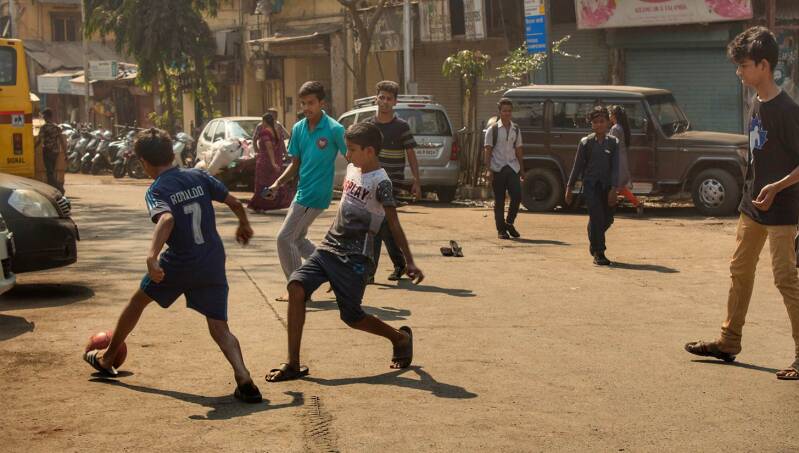
Despite a fanbase bigger than most footballing nations’ populations, India has never graced a World Cup or produced a global icon. The passion is there, so why hasn’t it translated into success on the pitch?
With a population of 1.41 billion, it’s almost unthinkable that India, a country bursting with passion and sporting heritage, has never reached a FIFA World Cup. Even more puzzling is that no Indian footballer has ever become a genuine global star.
The reasons run deep. From the way academies are structured to the limited government support for the game, Indian football has been held back by a system that seems designed to stop its own progress. And yet, the appetite for the sport is enormous.
A 2021 survey found that around 21% of Indians identify as football fans, which is roughly 305 million people, more than the entire populations of Brazil, France, or Germany. All three of those nations are serial tournament winners. So what’s the difference between them and India?
Starting Too Late
Arguably, the biggest reason lies in the academy system. In football’s powerhouse nations, kids enter academies at eight years old, spending years developing the technical foundations of the game. By sixteen, many are knocking on the door of senior squads.
In India, that journey often starts four years later. Most academies don’t take players until they’re twelve, meaning young footballers miss out on crucial formative years.
Sports journalist Neeladri Bhattacharjee from Sportstar explains that the problem goes beyond just timing. “You will see parents moving out with their children because their children are playing in academies which are away from their homes.” This is just something not every family can afford.
It’s a logistical and cultural hurdle. In India, football still isn’t viewed as a stable career path. Families are understandably hesitant to uproot their lives for a dream that might never pay off. Bhattacharjee believes this lack of early, intensive development limits players’ growth. This is a stark contrast to the system in cricket, where sending children to residential academies is normal. Unsurprisingly, India’s cricketing dominance mirrors the investment and structure that football lacks.
A Missed Foundation
The late start means many Indian players are still learning the fundamentals well into their teens. Arsène Wenger, the legendary former Arsenal manager, summed it up in 2022:
“I believe India has always invested a lot in education. But football is not like any other job. Unfortunately, it starts at a very young age. You cannot start to play football at 15 years of age. You have to start at 5–6 years because you have to find your feet.”
It’s a harsh but honest truth that India’s football leaders can’t ignore.
There has been some progress, though. Many academies now focus on structured training programmes, improved fitness regimes, and tactical awareness. The facilities are better, and coaching standards are slowly rising. But these gains often come at the expense of the mental and emotional aspects of development, things like nutrition, resilience, and life planning after football.
For a young player, learning how to cope is just as vital as learning how to pass.
The Money Problem
Even with better facilities, football in India faces an even more pressing issue: money.
Government funding has plummeted in recent years. According to official figures, allocations to the All India Football Federation (AIFF) dropped from ₹30 crore (£2.5 million) in 2019–20 to just ₹8.78 crore (£743,000) in 2022–23. This is a staggering 73% cut.
That’s not a small dip; it’s a statement. While nations like Japan, South Korea, and even smaller Asian neighbours are pouring resources into grassroots development and elite programmes, India’s football budget looks like an afterthought.
And in the modern game, funding isn’t optional. Money builds pitches, pays for coaching, creates scouting networks, and opens doors for talent. Look at what cash injections did for clubs like Newcastle United, Wrexham AFC, or Birmingham City. Each is transformed by investment. Without financial backing, the dream of world-class Indian football remains stuck in neutral.
Perception and Visibility
Perhaps the most under-discussed barrier, though, is perception.
Indian football still carries a stigma internationally. Many scouts and agents simply don’t take the Indian scene seriously, dismissing the Indian Super League (ISL) and domestic academies as second-tier.
That mindset filters down to opportunity. As Ivorian forward Abdoulaye Koffi, who played in the ISL, once said:
“Indians play from their hearts, and that makes the league very competitive. I underrated Indian football before coming here, but now I can say Indian football is very, very good.”
It’s telling that Koffi, a journeyman player, admits even professionals from abroad underestimate Indian football. This lack of visibility means local stars rarely get scouted by bigger clubs. Even those who show promise often hit a ceiling simply because the world isn’t watching.
Bhattacharjee believes the solution lies in exposure: “You need international scouts to allow players to get out of this country”, believing that India does not have a serious football culture, and with players playing in more watched leagues, this would change.
A Country Waiting to Believe
India’s football problem isn’t a lack of passion; it’s a lack of structure, funding, and faith.
The talent exists. The fanbase exists. The desire exists. But until the system catches up, until kids can start young, coaches are properly funded, and the world takes Indian football seriously, the nation will keep waiting for its first footballing icon.
India has already shown in cricket that it can build a sporting empire when it commits fully. The question now is whether it’s ready to do the same for the beautiful game.
Because somewhere in Kolkata, Goa, or Kerala, there’s a kid with the talent to be the next Sunil Chhetri, or even the next Messi. The only question is whether India will give him the chance to find his feet before it’s too late.